

Japanese Food & Sake Reception "Sake New Year" Held
2026/7/1
Promoting UNESCO-Recognized Washoku and Traditional Knowledge and Skills of Sake-making to ASEAN
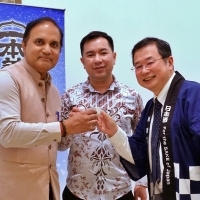
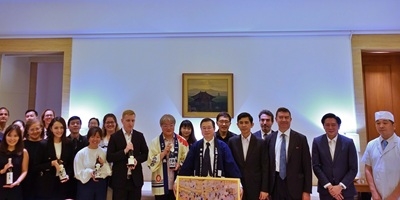
On 1 July 2026, the Mission of Japan to ASEAN hosted the Japanese Food & Sake Reception "Sake New Year" at the Ambassador's Official Residence in Jakarta to celebrate the beginning of Japan's new sake brewing year.
The reception was organized to introduce the appeal of Japanese cuisine and sake to ASEAN stakeholders and to deepen their understanding of Japan's food culture. It also marked a new initiative following the launch of Japan's Official Residence Chef Program this year, which aims to strengthen the role of official residence chefs in promoting Japanese culture overseas.
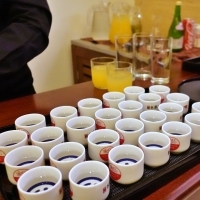
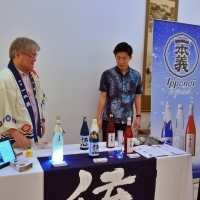
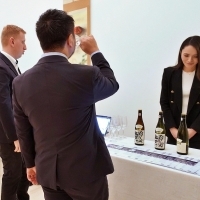
The reception featured Japan's Traditional Knowledge and Skills of Sake-making, which was inscribed on UNESCO's Representative List of the Intangible Cultural Heritage of Humanity in 2024. Guests enjoyed nine varieties of Japanese sake currently available in Indonesia.
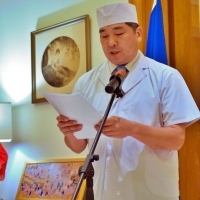
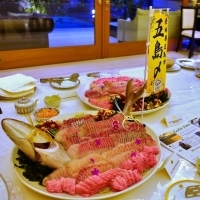
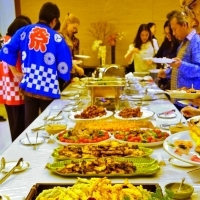
The cuisine was prepared by Chef Atsushi Morita, the Official Residence Chef of the Mission of Japan to ASEAN. The menu included sushi and sashimi made with seafood processed using the Goto-jime technique — a fish processing method originating from the Goto Islands, Nagasaki Prefecture —, dishes showcasing featuring Japan's traditional fermentation culture through koji, as well as tempura and duck dishes carefully crafted to pair with Japanese sake.
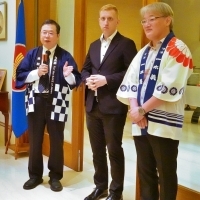
The reception also welcomed Mr. Matei Gabriel Nicolae, a Canadian sake craftsman working at a sake brewery in Aichi Prefecture. He shared his journey into sake brewing and highlighted the appeal of Japanese sake.
In his opening remarks, Mr. Kazuo Chujo, Chargé d'Affaires ad interim, introduced koji fermentation, the common foundation of sake, miso, and soy sauce, and explained how it creates the rich umami characteristic of Japanese cuisine. He also noted that ASEAN countries have their own rich fermentation traditions, highlighting how Japan and ASEAN are connected through their shared food cultures.
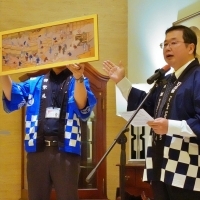
Mr. Chujo further introduced Washoku and Japan’s Traditional Knowledge and Skills of Sake-making, alongside food cultures from ASEAN that have also been recognized by UNESCO as Intangible Cultural Heritage. He emphasized that food culture serves as a "window into culture," reflecting the daily lives and traditions of local communities. An Edo-period illustration of sake brewing was also displayed to introduce the wisdom and craftsmanship that have been passed down through generations of sake brewers.
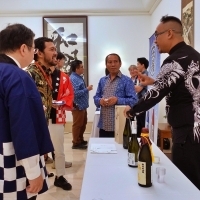
Approximately 60 participants, including officials from the ASEAN Secretariat, representatives of ASEAN Member States and Dialogue Partners, members of the diplomatic corps, and business representatives, attended the reception. While enjoying Japanese cuisine paired with sake, guests deepened their understanding of Japanese food culture, including Japanese sake, Goto-jime, and Japan's fermentation traditions. Many participants also expressed great interest in the diversity of sake flavors. One guest commented that the taste of sake was "very familiar to Indonesians, reminding me of tape—a traditional Indonesian fermented food made from cassava or glutinous rice." The reception also introduced 1 July as the beginning of Japan's new sake brewing year, and participants celebrated the occasion together with the greeting:
"Happy Sake New Year!"
The Mission of Japan to ASEAN will continue to actively promote the appeal of Japanese food culture as well as Japan's agriculture, forestry and fishery products and food products, while further strengthening exchanges between Japan and ASEAN.
On 1 July 2026, the Mission of Japan to ASEAN hosted the Japanese Food & Sake Reception "Sake New Year" at the Ambassador's Official Residence in Jakarta to celebrate the beginning of Japan's new sake brewing year.
The reception was organized to introduce the appeal of Japanese cuisine and sake to ASEAN stakeholders and to deepen their understanding of Japan's food culture. It also marked a new initiative following the launch of Japan's Official Residence Chef Program this year, which aims to strengthen the role of official residence chefs in promoting Japanese culture overseas.
The reception featured Japan's Traditional Knowledge and Skills of Sake-making, which was inscribed on UNESCO's Representative List of the Intangible Cultural Heritage of Humanity in 2024. Guests enjoyed nine varieties of Japanese sake currently available in Indonesia.
The cuisine was prepared by Chef Atsushi Morita, the Official Residence Chef of the Mission of Japan to ASEAN. The menu included sushi and sashimi made with seafood processed using the Goto-jime technique — a fish processing method originating from the Goto Islands, Nagasaki Prefecture —, dishes showcasing featuring Japan's traditional fermentation culture through koji, as well as tempura and duck dishes carefully crafted to pair with Japanese sake.
The reception also welcomed Mr. Matei Gabriel Nicolae, a Canadian sake craftsman working at a sake brewery in Aichi Prefecture. He shared his journey into sake brewing and highlighted the appeal of Japanese sake.
In his opening remarks, Mr. Kazuo Chujo, Chargé d'Affaires ad interim, introduced koji fermentation, the common foundation of sake, miso, and soy sauce, and explained how it creates the rich umami characteristic of Japanese cuisine. He also noted that ASEAN countries have their own rich fermentation traditions, highlighting how Japan and ASEAN are connected through their shared food cultures.
Mr. Chujo further introduced Washoku and Japan’s Traditional Knowledge and Skills of Sake-making, alongside food cultures from ASEAN that have also been recognized by UNESCO as Intangible Cultural Heritage. He emphasized that food culture serves as a "window into culture," reflecting the daily lives and traditions of local communities. An Edo-period illustration of sake brewing was also displayed to introduce the wisdom and craftsmanship that have been passed down through generations of sake brewers.
Approximately 60 participants, including officials from the ASEAN Secretariat, representatives of ASEAN Member States and Dialogue Partners, members of the diplomatic corps, and business representatives, attended the reception. While enjoying Japanese cuisine paired with sake, guests deepened their understanding of Japanese food culture, including Japanese sake, Goto-jime, and Japan's fermentation traditions. Many participants also expressed great interest in the diversity of sake flavors. One guest commented that the taste of sake was "very familiar to Indonesians, reminding me of tape—a traditional Indonesian fermented food made from cassava or glutinous rice." The reception also introduced 1 July as the beginning of Japan's new sake brewing year, and participants celebrated the occasion together with the greeting:
"Happy Sake New Year!"
The Mission of Japan to ASEAN will continue to actively promote the appeal of Japanese food culture as well as Japan's agriculture, forestry and fishery products and food products, while further strengthening exchanges between Japan and ASEAN.